
Economics & Business Tech
Shape the future of markets with smart pricing, predictive models, and next-gen fintech.
Economics & Business Tech
Shape the future of markets with smart pricing, predictive models, and next-gen fintech.
Economics & Business Tech
Shape the future of markets with smart pricing, predictive models, and next-gen fintech.
Economics & Business Tech
Shape the future of markets with smart pricing, predictive models, and next-gen fintech.
Enhancing Transfer Market Strategy With Footballer Price Prediction
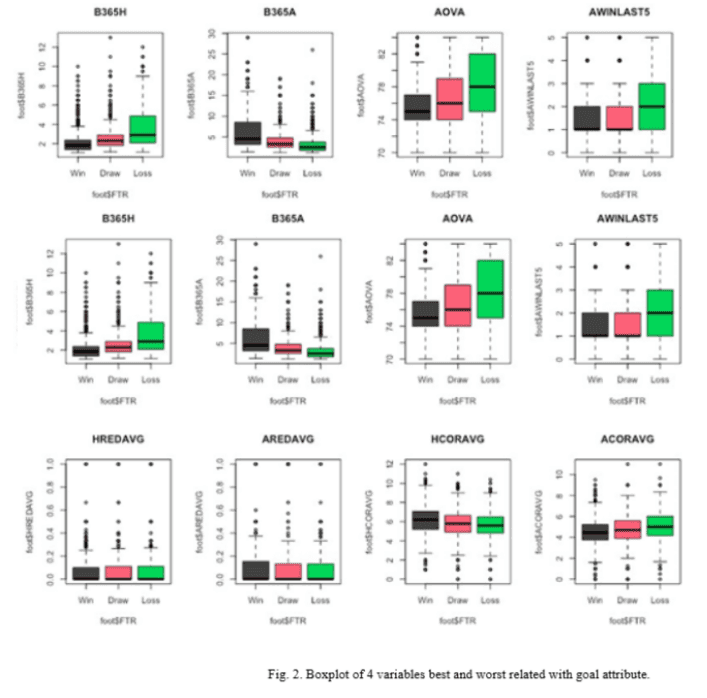
This research project delves into the captivating realm of football player market value prediction, an intersection of sports, data science, and economics. Football's global cultural significance and economic impact make it a unique subject of study. The project employs a multidimensional dataset encompassing player attributes, both on and off the field, to unravel the complex factors shaping individual football player valuations. Meticulous data preparation ensures data integrity, and a genetic algorithm optimizes attribute weights for regression models, fostering continuous improvement. With football standing as the world's most beloved sport, transcending its role to become a global cultural phenomenon, its economic facet holds a unique intrigue. This research code embarks on a compelling journey, unraveling the strategies and methodologies employed to predict football player market values – a pivotal aspect within the modern football landscape.
Enhancing Transfer Market Strategy With Footballer Price Prediction
This research project delves into the captivating realm of football player market value prediction, an intersection of sports, data science, and economics. Football's global cultural significance and economic impact make it a unique subject of study. The project employs a multidimensional dataset encompassing player attributes, both on and off the field, to unravel the complex factors shaping individual football player valuations. Meticulous data preparation ensures data integrity, and a genetic algorithm optimizes attribute weights for regression models, fostering continuous improvement. With football standing as the world's most beloved sport, transcending its role to become a global cultural phenomenon, its economic facet holds a unique intrigue. This research code embarks on a compelling journey, unraveling the strategies and methodologies employed to predict football player market values – a pivotal aspect within the modern football landscape.
A Logical Agent Approach to Solving the Wumpus World Problem: An Analysis of Game Trees
The Wumpus world problem is a classic AI challenge in which an Agent must navigate a maze like environment to find and retrieve gold while avoiding obstacles such as pits and a monster called the Wumpus. This project aims to implement a logical agent to solve the Wumpus World problem using a combination of first-order logic and the Minimax algorithm. The environment is represented as a set of logical propositions. The agent's knowledge base is expressed as a set of first-order logic rules describing the relationships between the propositions. The Minimax algorithm is used to generate a game tree and compute the minimax values of the nodes in the tree, allowing the agent to make informed decisions about which actions to take. The implementation demonstrates the versatility and expressiveness of logical agents for solving complex AI problems and highlights the potential benefits of using first- order logic in AI systems.
A Logical Agent Approach to Solving the Wumpus World Problem: An Analysis of Game Trees
The research presented here looks into the vibration properties of 3D-printed airless tires, which have the potential to revolutionize tire design and transportation efficiency. Through extensive experimentation and vibration research, three distinct tire constructions were investigated. Because of its good damping and deformation qualities, thermoplastic polyurethane (TPU) was chosen as the 3D printing material. The experimental arrangement was designed to simulate real-world road conditions, and an MPU6050 sensor captured tire vibrations in three axes. The vibrational properties of the tire structures were revealed using Fast Fourier Transform (FFT) analysis, allowing for a comparative assessment of their stability. Structure 1 was found to be the most vibration-stable, followed by Structures 3 and 2.
A Logical Agent Approach to Solving the Wumpus World Problem: An Analysis of Game Trees
The Wumpus world problem is a classic AI challenge in which an Agent must navigate a maze like environment to find and retrieve gold while avoiding obstacles such as pits and a monster called the Wumpus. This project aims to implement a logical agent to solve the Wumpus World problem using a combination of first-order logic and the Minimax algorithm. The environment is represented as a set of logical propositions. The agent's knowledge base is expressed as a set of first-order logic rules describing the relationships between the propositions. The Minimax algorithm is used to generate a game tree and compute the minimax values of the nodes in the tree, allowing the agent to make informed decisions about which actions to take. The implementation demonstrates the versatility and expressiveness of logical agents for solving complex AI problems and highlights the potential benefits of using first- order logic in AI systems.
Statistical Scrutiny of the Prediction Capability of Different Time Series Machine Learning Models in Forecasting Bitcoin Prices
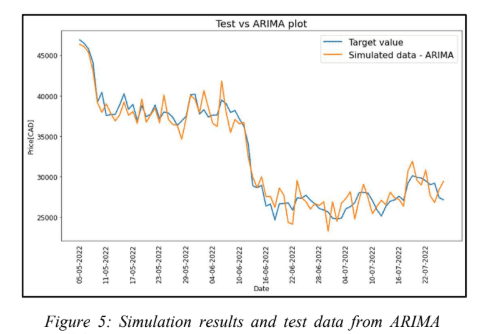
Cryptocurrencies (CTC) are decentralized digital currencies. In the past decade, there has been a massive increase in its usage due to the advancements made in the field of blockchain. Bitcoin (BTC) is the first decentralized CTC that garnered a lot of attention from the media as well as the public due to its ability to sustain the momentum in the market. However, investing in BTC is not the first choice of the investor due to the market's erratic behavior, price volatility, and lack of a model that could be used to predict its price. In this direction, the present study aims in developing a time-series forecasting model that can efficiently as well as effectively predict the price of Bitcoins. For this purpose, three machine learning (ML) models namely Long Short Term Memory (LSTM), Autoregressive Integrated Moving Average method (ARIMA), and Seasonal Autoregressive Integrated MovingAverage method (SARIMA) models have been employed which are statistically scrutinized on the basis of the performance metrics namely Root Mean Square Error (RMSE), Mean Absolute Percentage Error (MAPE) and coefficient of determination (R2 ).
Statistical Scrutiny of the Prediction Capability of Different Time Series Machine Learning Models in Forecasting Bitcoin Prices
Cryptocurrencies (CTC) are decentralized digital currencies. In the past decade, there has been a massive increase in its usage due to the advancements made in the field of blockchain. Bitcoin (BTC) is the first decentralized CTC that garnered a lot of attention from the media as well as the public due to its ability to sustain the momentum in the market. However, investing in BTC is not the first choice of the investor due to the market's erratic behavior, price volatility, and lack of a model that could be used to predict its price. In this direction, the present study aims in developing a time-series forecasting model that can efficiently as well as effectively predict the price of Bitcoins. For this purpose, three machine learning (ML) models namely Long Short Term Memory (LSTM), Autoregressive Integrated Moving Average method (ARIMA), and Seasonal Autoregressive Integrated MovingAverage method (SARIMA) models have been employed which are statistically scrutinized on the basis of the performance metrics namely Root Mean Square Error (RMSE), Mean Absolute Percentage Error (MAPE) and coefficient of determination (R2 ).

An Integrated Approach to Select the
Dream Team for a Cricket Match
This paper proposes an integrated approach for selecting the best fantasy cricket team based on player performance. The approach combines the cross-entropy method, weighted sum method (WSM), and goal programming problem (GPP). It extracts player performance data through web scraping and computes points using cross-entropy and WSM, giving higher weightage to recent games. The GPP part selects players by using binary decision variables, where 1 indicates a player's inclusion in the team. The proposed algorithm dynamically adjusts factor weights based on recent performance. The approach is applied to select the dream team for an India-New Zealand cricket match, demonstrating its practicality.
An Integrated Approach to Select the
Dream Team for a Cricket Match
This paper proposes an integrated approach for selecting the best fantasy cricket team based on player performance. The approach combines the cross-entropy method, weighted sum method (WSM), and goal programming problem (GPP). It extracts player performance data through web scraping and computes points using cross-entropy and WSM, giving higher weightage to recent games. The GPP part selects players by using binary decision variables, where 1 indicates a player's inclusion in the team. The proposed algorithm dynamically adjusts factor weights based on recent performance. The approach is applied to select the dream team for an India-New Zealand cricket match, demonstrating its practicality.
Application of deep learning neural network to create a multi-class identifier to Detect and categorize periodontal diseases
Periodontal diseases is the major cause of bad breath and loss of tooth in adults worldwide. The comprehensive intention of the present study is to detect and categorize the type of periodontal diseases. In order to achieve the objective a Convolution Neural Network (CNN) model is proposed in the study. The proposed CNN model is built using the Tensorflow framework which is coded in Python 3.8. The proposed model is trained using 3241 images of periodontal and non-periodontal diseases. The CNN model is tested using 90 images. The training and testing accuracy of the CNN model is 97.82% and 73.61% respectively whereas the loss computed by Mean Squre Error (MSE) for training and testing is 0.07 and 0.006 respectively.
Application of deep learning neural network to create a multi-class identifier to Detect and categorize periodontal diseases
Periodontal diseases is the major cause of bad breath and loss of tooth in adults worldwide. The comprehensive intention of the present study is to detect and categorize the type of periodontal diseases. In order to achieve the objective a Convolution Neural Network (CNN) model is proposed in the study. The proposed CNN model is built using the Tensorflow framework which is coded in Python 3.8. The proposed model is trained using 3241 images of periodontal and non-periodontal diseases. The CNN model is tested using 90 images. The training and testing accuracy of the CNN model is 97.82% and 73.61% respectively whereas the loss computed by Mean Squre Error (MSE) for training and testing is 0.07 and 0.006 respectively.
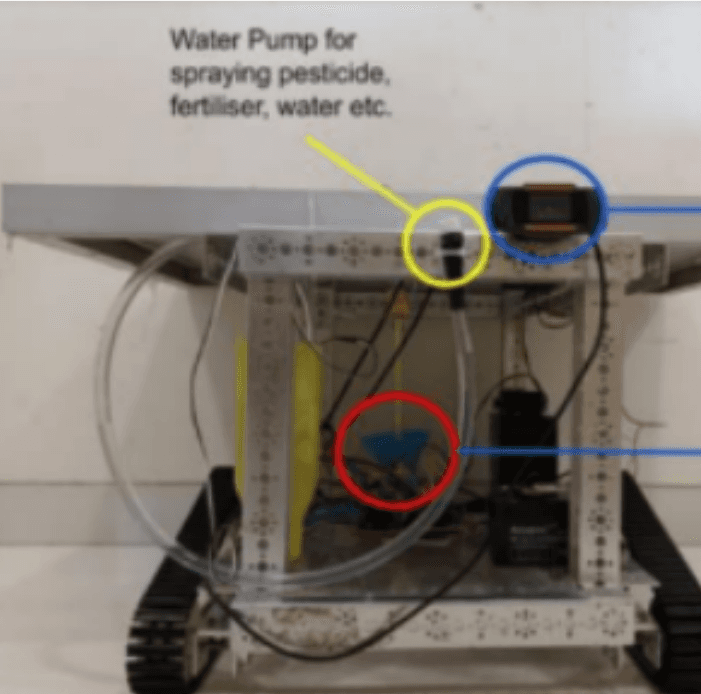
Smart Robotic Pythomedic and Pesticide Sprayer using
Image Processing and machine learning
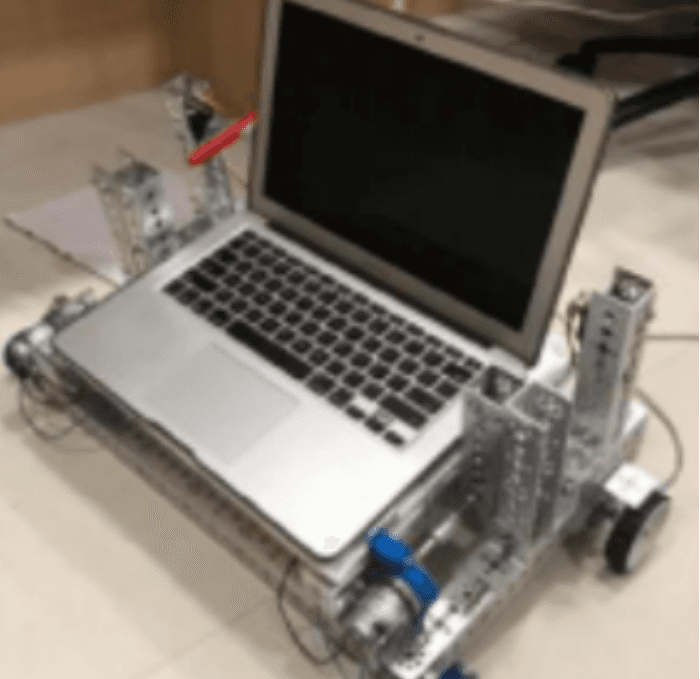
Plant diseases pose a significant global and Indian agricultural challenge, resulting in crop yield reduction and financial losses for farmers. While existing solutions like smart disease detection using machine learning offer promise, they often present cost or implementation barriers. Our solution introduces a user-friendly Smart Spraying robot equipped with a front camera and machine learning algorithm to identify and address plant diseases efficiently. Tested with over 3000 images across three vegetable plants, the model demonstrates 100% accuracy in detecting specific leaf diseases. However, its applicability is currently limited to these plants. Future iterations can expand its scope to encompass a broader range of crops.
Smart Robotic Pythomedic and Pesticide Sprayer using
Image Processing and machine learning
Plant diseases pose a significant global and Indian agricultural challenge, resulting in crop yield reduction and financial losses for farmers. While existing solutions like smart disease detection using machine learning offer promise, they often present cost or implementation barriers. Our solution introduces a user-friendly Smart Spraying robot equipped with a front camera and machine learning algorithm to identify and address plant diseases efficiently. Tested with over 3000 images across three vegetable plants, the model demonstrates 100% accuracy in detecting specific leaf diseases. However, its applicability is currently limited to these plants. Future iterations can expand its scope to encompass a broader range of crops.
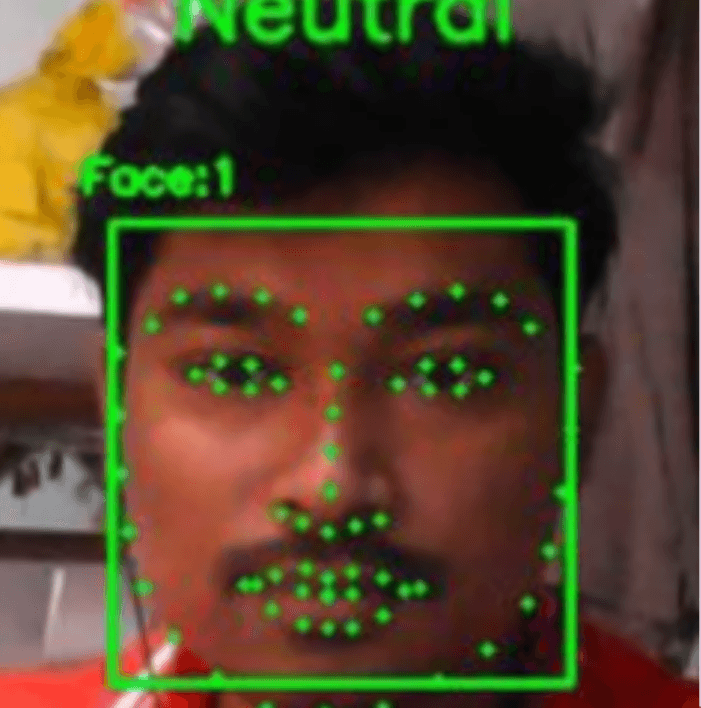
Deep Learning and Computer Vision-Based Attentiveness Tracking for Autistic Students in Online Learning Environments
Individuals with Autism Spectrum Disorder (ASD) often struggle with attention, which has been exacerbated by the shift to virtual learning during the COVID-19 pandemic. This paper presents 'Panacea,' a deep learning software designed to track the attentiveness of autistic students during online lessons. By analyzing facial expressions, orientation, and pupil movement, Panacea provides real-time data to instructors, helping them gauge student concentration levels. The system achieves 97% accuracy by integrating machine learning to detect emotions and employs a probability density function to classify attentiveness.
Deep Learning and Computer Vision-Based Attentiveness Tracking for Autistic Students in Online Learning Environments
Individuals with Autism Spectrum Disorder (ASD) often struggle with attention, which has been exacerbated by the shift to virtual learning during the COVID-19 pandemic. This paper presents 'Panacea,' a deep learning software designed to track the attentiveness of autistic students during online lessons. By analyzing facial expressions, orientation, and pupil movement, Panacea provides real-time data to instructors, helping them gauge student concentration levels. The system achieves 97% accuracy by integrating machine learning to detect emotions and employs a probability density function to classify attentiveness.
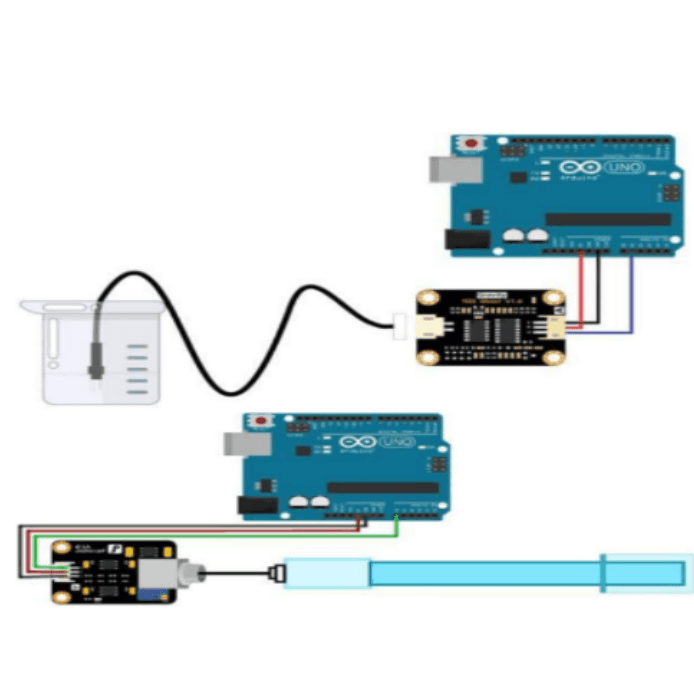
A Novel Approach Towards Calculating The Reusability Coefficient Of Water From Nearby Water Bodies Using Artificial Intelligence
Most water bodies are polluted, but there is limited data on the level of pollution. This project proposes a solution to assess water quality by collecting samples from various sources like sewage, rivers, and farms. The solution has three parts: 1) detecting turbidity using image processing, 2) measuring TDS and pH using an Arduino-based prototype, and 3) determining a quality coefficient through machine learning. All components are integrated into a 3D-printed device. The model achieves an accuracy of 89% in estimating water quality, while the circuit accurately measures TDS and pH. This real-time solution enables the detection of water body quality and potential usage after appropriate treatment.
A Novel Approach Towards Calculating The Reusability Coefficient Of Water From Nearby Water Bodies Using Artificial Intelligence
Most water bodies are polluted, but there is limited data on the level of pollution. This project proposes a solution to assess water quality by collecting samples from various sources like sewage, rivers, and farms. The solution has three parts: 1) detecting turbidity using image processing, 2) measuring TDS and pH using an Arduino-based prototype, and 3) determining a quality coefficient through machine learning. All components are integrated into a 3D-printed device. The model achieves an accuracy of 89% in estimating water quality, while the circuit accurately measures TDS and pH. This real-time solution enables the detection of water body quality and potential usage after appropriate treatment.
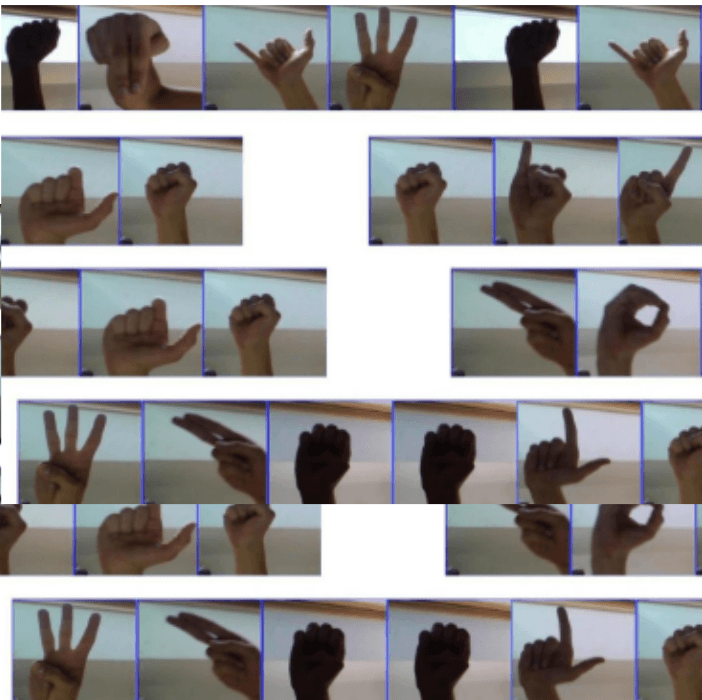
Converting Youtube Video to American Sign Language Translation Using Convolution Neural Network and Video Processing
Sign language is a vital mode of communication for the deaf, comprising around 5% of the global population. Despite the availability of subtitles in various languages, YouTube lacks sign language-based subtitles. This study aims to develop American Sign Language (ASL) subtitles for YouTube videos. The proposed method involves a three-phase framework integrating deep learning-based Convolutional Neural Network (CNN) and image/video processing techniques. A torch-based CNN model achieved high accuracy in training and testing (99.982% and 98% respectively). The study demonstrates the practical application of the integrated method by extracting a random YouTube video.
Converting Youtube Video to American Sign Language Translation Using Convolution Neural Network and Video Processing
Sign language is a vital mode of communication for the deaf, comprising around 5% of the global population. Despite the availability of subtitles in various languages, YouTube lacks sign language-based subtitles. This study aims to develop American Sign Language (ASL) subtitles for YouTube videos. The proposed method involves a three-phase framework integrating deep learning-based Convolutional Neural Network (CNN) and image/video processing techniques. A torch-based CNN model achieved high accuracy in training and testing (99.982% and 98% respectively). The study demonstrates the practical application of the integrated method by extracting a random YouTube video.
Hybrid Machine Learning Applications in Classifying the Sentiment by Analyzing the Political Tweets
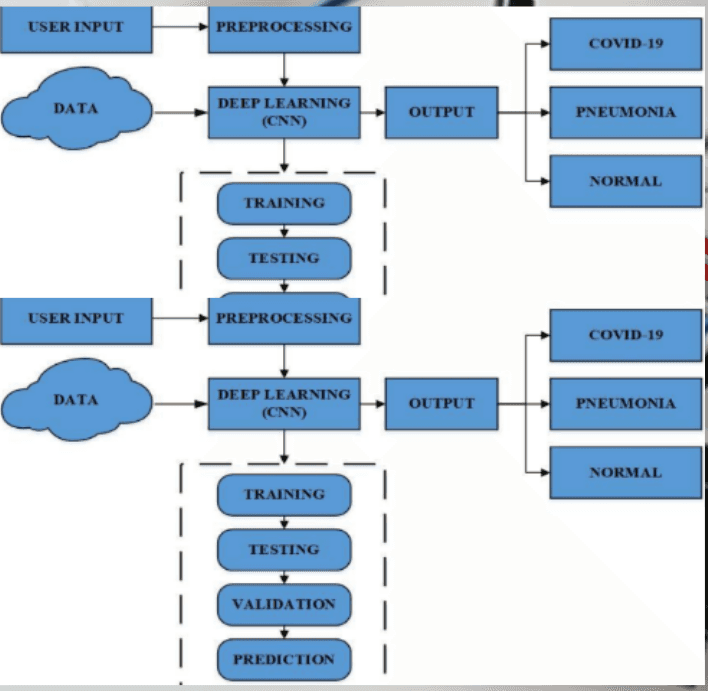
The study proposes a hybrid machine learning algorithm combining natural language processing (NLP) and long short-term memory (LSTM) for sentiment analysis of political tweets. The NLP part extracts keywords summarizing the tweets and correlates them with positive or negative sentiments, while the LSTM part classifies the keywords into positive or negative sentiments. The model was applied to a dataset of 1.6 million political tweets and achieved 78% accuracy, 0.456 loss, 79% precision, and 0.78 F1 score. The aim is to analyze public sentiment from tweets to detect early crises and strategize political moves.
Hybrid Machine Learning Applications in Classifying the Sentiment by Analyzing the Political Tweets
The study proposes a hybrid machine learning algorithm combining natural language processing (NLP) and long short-term memory (LSTM) for sentiment analysis of political tweets. The NLP part extracts keywords summarizing the tweets and correlates them with positive or negative sentiments, while the LSTM part classifies the keywords into positive or negative sentiments. The model was applied to a dataset of 1.6 million political tweets and achieved 78% accuracy, 0.456 loss, 79% precision, and 0.78 F1 score. The aim is to analyze public sentiment from tweets to detect early crises and strategize political moves.
A Machine Learning Approach To Identify The Best Cryptocurrency For Investment
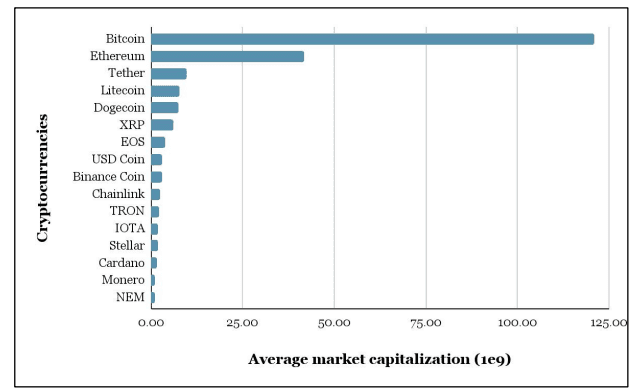
The abstract discusses the development of models to forecast cryptocurrency (CTC) prices and determine the most stable, high-return, and low-risk CTCs for investment purposes. Due to the lack of oversight and uncertainty surrounding cryptocurrencies, investors are often hesitant to invest in them. To address this, Artificial Neural Network (ANN) and Support Vector Machine (SVM) models are developed and trained using time-series data scraped from data.cryptocompare.com. The top five CTCs with the highest average market capitalization are considered for analysis. The ANN model achieved training and testing accuracies of 0.9876 and 0.9198, respectively, while the SVM model achieved 0.796 and 0.7981 for training and testing accuracies. Based on the data from August 1, 2022, the ANN and SVM models predicted Ethereum (ETH) and Dogecoin (DGC) as the best investment options for CTCs.
A Machine Learning Approach To Identify The Best Cryptocurrency For Investment
The abstract discusses the development of models to forecast cryptocurrency (CTC) prices and determine the most stable, high-return, and low-risk CTCs for investment purposes. Due to the lack of oversight and uncertainty surrounding cryptocurrencies, investors are often hesitant to invest in them. To address this, Artificial Neural Network (ANN) and Support Vector Machine (SVM) models are developed and trained using time-series data scraped from data.cryptocompare.com. The top five CTCs with the highest average market capitalization are considered for analysis. The ANN model achieved training and testing accuracies of 0.9876 and 0.9198, respectively, while the SVM model achieved 0.796 and 0.7981 for training and testing accuracies. Based on the data from August 1, 2022, the ANN and SVM models predicted Ethereum (ETH) and Dogecoin (DGC) as the best investment options for CTCs.
The Future of Travel: Assessing the Transformative Effects of Metaverse Travel on Tourism Industry
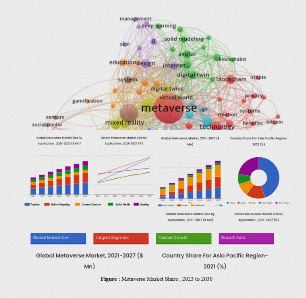
The main objective of this financial analysis project is to evaluate how virtual metaverse adoption could impact different aspects of the tourism industry. It aims to study areas such as revenue generation, employment opportunities, investment patterns, and overall economic growth within the tourism sector. To achieve this, the study will employ a rigorous research methodology that encompasses data collection from various sources, thorough data analysis, and financial modelling techniques. The analysis will involve studying real-world data from existing virtual metaverse platforms, tourism industry reports, and economic indicators to project potential outcomes. This project investigates the financial ramifications of incorporating virtual metaverse technologies into the tourism industry.
The Future of Travel: Assessing the Transformative Effects of Metaverse Travel on Tourism Industry
The main objective of this financial analysis project is to evaluate how virtual metaverse adoption could impact different aspects of the tourism industry. It aims to study areas such as revenue generation, employment opportunities, investment patterns, and overall economic growth within the tourism sector. To achieve this, the study will employ a rigorous research methodology that encompasses data collection from various sources, thorough data analysis, and financial modelling techniques. The analysis will involve studying real-world data from existing virtual metaverse platforms, tourism industry reports, and economic indicators to project potential outcomes. This project investigates the financial ramifications of incorporating virtual metaverse technologies into the tourism industry.
Find your nearest innovation lab
These awards reflect projects that pushed my boundaries, told deeper stories, and caught the attention of people who care about what visuals can say.
Find your nearest innovation lab
These awards reflect projects that pushed my boundaries, told deeper stories, and caught the attention of people who care about what visuals can say.